Summary
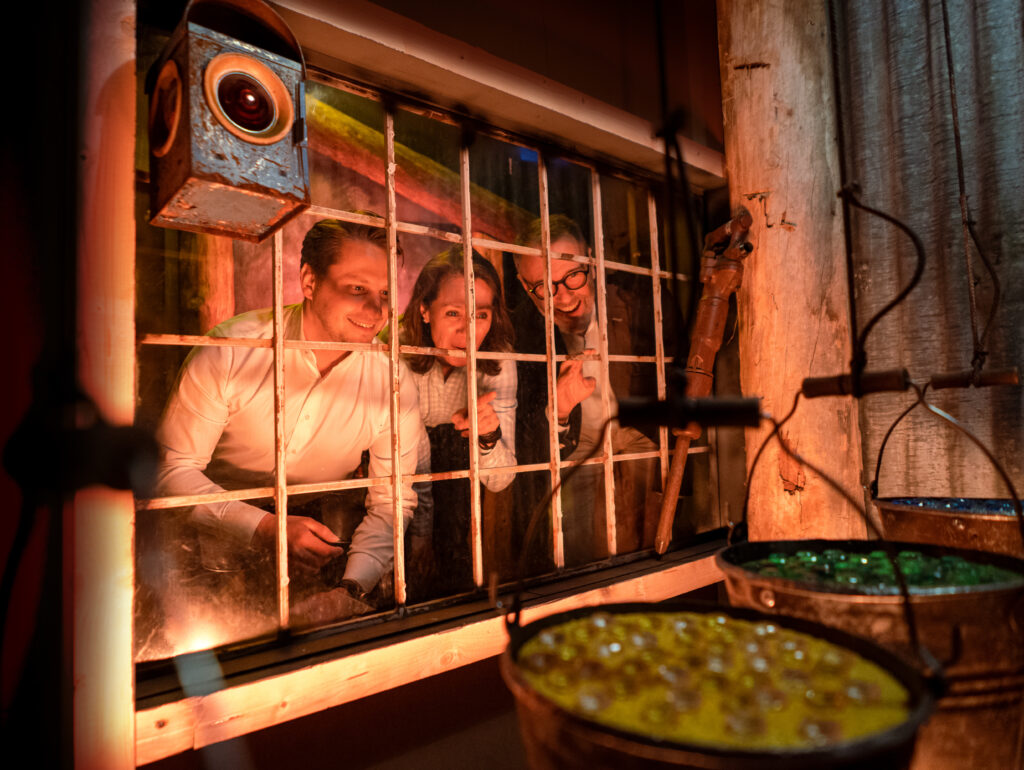
Reality Gaming can take different forms, but one important chapter in its history is rooted in the physical world – where real people become the players and real environments become the game. This form of gaming grew from a broader evolution in entertainment, from haunted attractions and game shows to video games that introduced new ways to explore, fail, learn and try again. In Sweden in the early 1990s, Boda Borg took these influences in a new direction. Its founders began building a real-life, interactive gaming concept in which people themselves became the players. The first Boda Borg opened in 1995, establishing the company as an early pioneer of real-life interactive gaming, more than a decade before the first Real Escape Game appeared in Japan. The concept evolved into what Boda Borg today calls Questing.
Boda Borg’s pioneering position lies not in inventing every form of interactive entertainment, but in establishing one of the earliest dedicated, publicly accessible Reality Gaming concepts – and developing it into an international business.
From watching the game to entering it
Long before virtual reality became mainstream and escape rooms spread around the world, entertainment was already moving beyond something people simply watched.
Haunted houses and immersive attractions at amusement parks were an early example during the 20th century. Visitors did not sit in an audience and observe the action. They physically entered an environment designed to create suspense, surprise and reaction.
Television game shows such as the $64,000 Question (1955) established the idea of contestants competing under a structured set of rules. Later, television game shows made participation more immersive. Contestants entered constructed environments where they had to think, search, solve problems, overcome obstacles and sometimes work against a clock. Formats such as The Adventure Game (1980), Fort Boyard (1990) and The Crystal Maze (1990) brought mental and physical challenges together in worlds created specifically for play.
Video games. At the same time, during the 1980s and 1990s, video games were rapidly changing people’s relationship with games themselves. Players explored unknown worlds on their computer. They discovered rules through experience. They failed, learned and tried again. The player was no longer simply following a set story. Their actions determined what happened next.
Boda Borg. These different forms of entertainment did not yet constitute Reality Gaming as Boda Borg would come to define it. But they introduced many of the ideas that would become important to real-life interactive gaming.
Then, in the early 1990s, five people in rural Sweden began taking those ideas somewhere new.
A new chapter in the history of Reality Gaming
The Boda Borg story started in 1993 in Stöde, Sweden. Five people had come together through a project with a challenging assignment: find an idea that could create jobs in the local area.
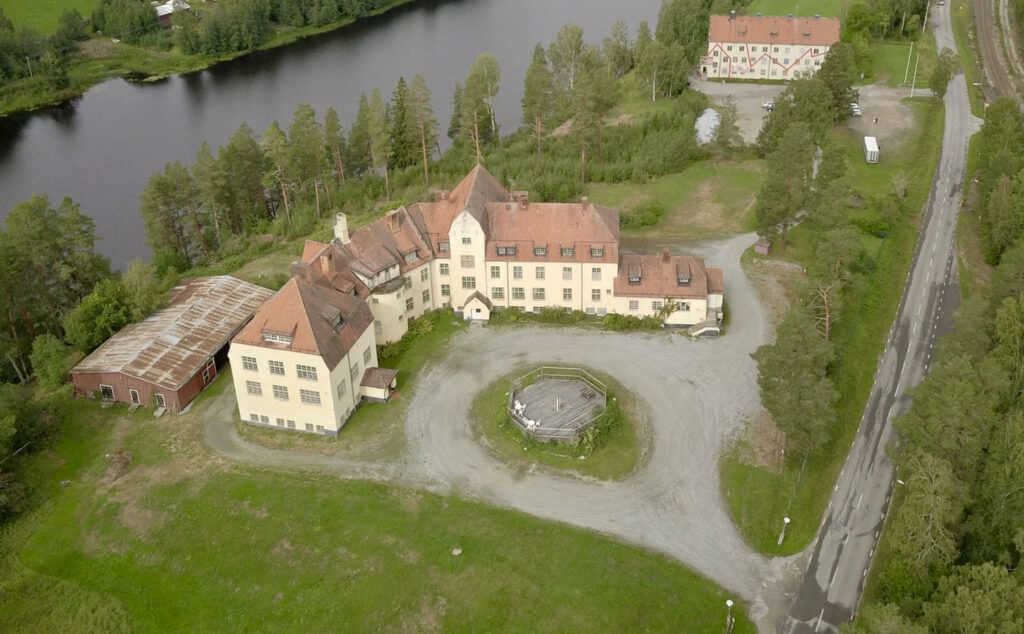
They explored tourist attractions, caves and empty buildings while searching for possibilities. Eventually, they discovered two large, abandoned buildings outside the small community of Torpshammar.
The buildings were fascinating, but there was a problem. They were filled with small rooms. At first, that seemed to make them unsuitable for an attraction intended to bring people together. Eventually, the limitation helped inspire something entirely different.
What if a video game could become real?
Part of the inspiration came from playing video games. One of the founders, Katarina Ödmark, recalls conversations about Super Mario Bros and the fascination of moving through different worlds without knowing exactly what would happen next.
A player could fail, start again, explore and gradually understand how the game worked. That led to a defining question: What if you could build this in real life?
Boda Borg’s historical material describes the idea as creating a “video-like game that people can play for real.” The inspiration combined the platform video games of the era with reality game shows and action films.
The founders began experimenting. They sourced equipment and tested pressure mats, electronic components, lights and other technology that could make physical spaces react to what people did inside them.
But the important innovation was not the technology itself. The game was becoming a real place, and real people were becoming the players.
When Boda Borg opened to the public in 1995, it introduced a distinctive form of real-life interactive gaming that was highly unusual for its time. Instead of watching contestants on television or controlling characters on a screen, Guests could enter themed environments and attempt to conquer game-like challenges themselves. This early concept would become Questing and establish Boda Borg as a pioneer in the development of Reality Gaming.
1995: the first Boda Borg opens
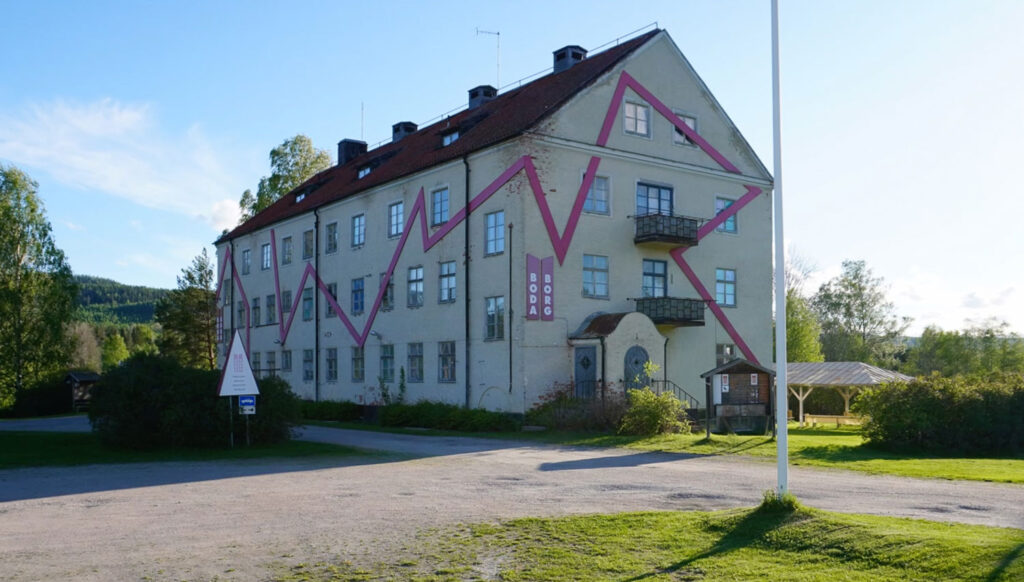
The first Boda Borg opened in Torpshammar in 1995 with just five Quests. The concept would evolve significantly over the years as Boda Borg learned from how Guests played. But the fundamental idea was already in place: real people, real environments and game-like challenges experienced together.
What distinguished Boda Borg was the combination of interactive game design, physical environments and a repeatable commercial experience. Rather than offering a single challenge or a performance to watch, Boda Borg created a concept in which Guests could explore multiple Quests, learn through trial and error, and return to discover more.
From the beginning, Playability became a central principle in Boda Borg’s approach to developing Quests. Through continuous observation, testing and refinement, the company has built extensive expertise in what makes an experience engaging, challenging and worth playing again. Today, with more than 20 Quests at each location, operations across five countries and over 300 Quests developed throughout its history, that accumulated knowledge continues to grow.
The opening in 1995 marked an important point in the history of Reality Gaming. Boda Borg had taken inspiration from video games, reality game shows and action films and turned it into a real-life interactive gaming concept.
What emerged at Boda Borg was not about watching other people face challenges. The Guests themselves became the players.
There was no avatar to control. No special equipment to wear. Instead, teams entered physical environments and had to discover what to do together. This became Questing, Boda Borg’s form of Reality Gaming. Like stepping into a video game where everything happens in real life.
Before the rise of escape rooms
Boda Borg opened its real-life interactive gaming concept in 1995. The first Real Escape Game created by SCRAP in Japan followed in 2007, more than a decade later. Escape rooms subsequently expanded internationally and helped make real-life interactive games familiar to a much broader audience.
While the two concepts share certain similarities, they offer distinctly different experiences. Boda Borg’s Questing is a more varied and dynamic alternative to traditional escape rooms, built around the freedom to choose from a wide range of fast-paced, themed Quests, each consisting of several challenges. Each Quest combines problem-solving, teamwork, and varying levels of physical challenge.
The chronology nevertheless helps establish Boda Borg’s place in the wider development of real-life interactive gaming. By the time escape rooms began to emerge, Boda Borg had already been operating and developing its Reality Gaming concept for more than a decade.
Reality Gaming moves beyond Torpshammar
Boda Borg’s Reality Gaming concept did not remain in Torpshammar. Karlskoga opened in 1997, followed by more locations in Sweden. In 2007, Boda Borg took its first step abroad with Lough Key in Ireland. Boston followed in 2015, Zürich in 2019 and Bochum in 2024.
As Boda Borg expanded, the idea first put into practice in Torpshammar traveled with it: Real people entering real environments to conquer game-like challenges together.
Questing had grown from an experiment in rural Sweden into an international Reality Gaming concept.
From five Quests in Torpshammar to an international operation with more than 300 Quests developed, Boda Borg’s history represents more than the creation of an entertainment concept. It reflects decades of experience in designing, testing and refining real-world interactive games.
Boda Borg’s place in the history of Reality Gaming
Reality Gaming did not emerge from one influence alone. Physical attractions had already invited audiences into constructed environments. Television Game shows put contestants inside mental and physical challenges. Video games introduced interactive worlds built around exploration, discovery, failure and retrying. Boda Borg brought those ideas together in a new way.
In 1995, it opened a real-life, interactive gaming concept in which ordinary people could enter the game themselves. No avatar. No headset. No need to watch somebody else take on the challenge. The Guests became the players.
More than 30 years later, the technology and Quests have evolved, but the fundamental principle remains: real people entering real environments to think, move, experiment and succeed together. That concept became Questing, Boda Borg’s form of Reality Gaming.
Boda Borg’s place in the history of physical Reality Gaming is defined by more than being early. It lies in turning the idea of real-world gaming into a repeatable entertainment concept – one that has continued to evolve across countries, generations and hundreds of Quests.
What began with five Quests in a small Swedish community has become an international concept built on more than three decades of experience in making games something people can physically enter, explore and experience together.
FAQ
When did Boda Borg start?
The idea behind Boda Borg began developing in Sweden in 1993, and the first Boda Borg opened in Torpshammar in 1995.
What inspired Boda Borg’s Reality Gaming concept?
The concept drew inspiration from platform video games, reality game shows and action films. An important early discussion among the founders concerned Super Mario and the experience of exploring different worlds, failing, learning and trying again.
What role did Boda Borg play in the history of Reality Gaming?
Boda Borg opened its first real-life interactive gaming concept in Sweden in 1995, establishing Boda Borg and Questing as early pioneers of Reality Gaming. The concept brought together physical environments, interactive challenges and teamwork in an experience where Guests themselves became the players. Boda Borg has since developed Questing into an international entertainment concept, with more than 300 Quests developed over its history.
Did Boda Borg exist before escape rooms?
Yes. The first Boda Borg opened in 1995, more than a decade before SCRAP introduced its Real Escape Game in Japan in 2007.
Is Boda Borg an escape room?
No. Both involve teams attempting problem-solving games in real life, but Boda Borg’s Questing offers a more varied and dynamic alternative to traditional escape rooms. Teams can freely choose between multiple fast-paced, themed Quests, each consisting of several challenges.
What is Questing?
Questing is Boda Borg’s form of Reality Gaming. Teams enter themed Quests and have to discover how to overcome different challenges together. Boda Borg describes the experience as being like stepping into a video game, but with everything happening in real life.