Summary
Reality Gaming can describe different forms of interactive entertainment, but one of its most direct expressions brings gaming into the physical world. Instead of controlling an avatar through a screen or experiencing a simulated environment through a headset, participants themselves take on challenges in real environments. Boda Borg’s own form of physical Reality Gaming is Questing, a concept pioneered in Sweden in 1995 and built around real-life teamwork.
A simple definition of Reality Gaming
The term Reality Gaming is sometimes associated with virtual reality (VR), augmented reality (AR) or alternate reality games (ARGs). However, Reality Gaming can also, and perhaps more appropriately, describe experiences in which the game itself takes place in the physical world, without relying on digital simulations.
For Boda Borg, Reality Gaming can be explained simply: real people attempt to conquer real-life game-like and adventure-based activities. The important word is real.
The players are physically present. They interact with an actual environment. They communicate face-to-face. Their actions determine what happens next.
Digital technology can exist behind the experience, but it does not replace reality. At Boda Borg, Guests do not need headsets or special wearable equipment to enter the game.

From controlling a character to becoming the player
Traditional video gaming gives players control over characters and worlds represented on a screen. Reality Gaming changes the relationship.
Imagine taking the underlying logic of a video game and making it physical. Instead of pressing a button to make a character act, you act. Instead of communicating with teammates through a headset, your teammates are standing beside you. That was the idea that emerged among Boda Borg’s founders in Sweden in the early 1990s.
While discussing video games, they became fascinated by the experience of exploring worlds, encountering the unknown, failing, restarting and learning through play. Their question was: Could that happen in real life?
Questing is Boda Borg’s form of Reality Gaming
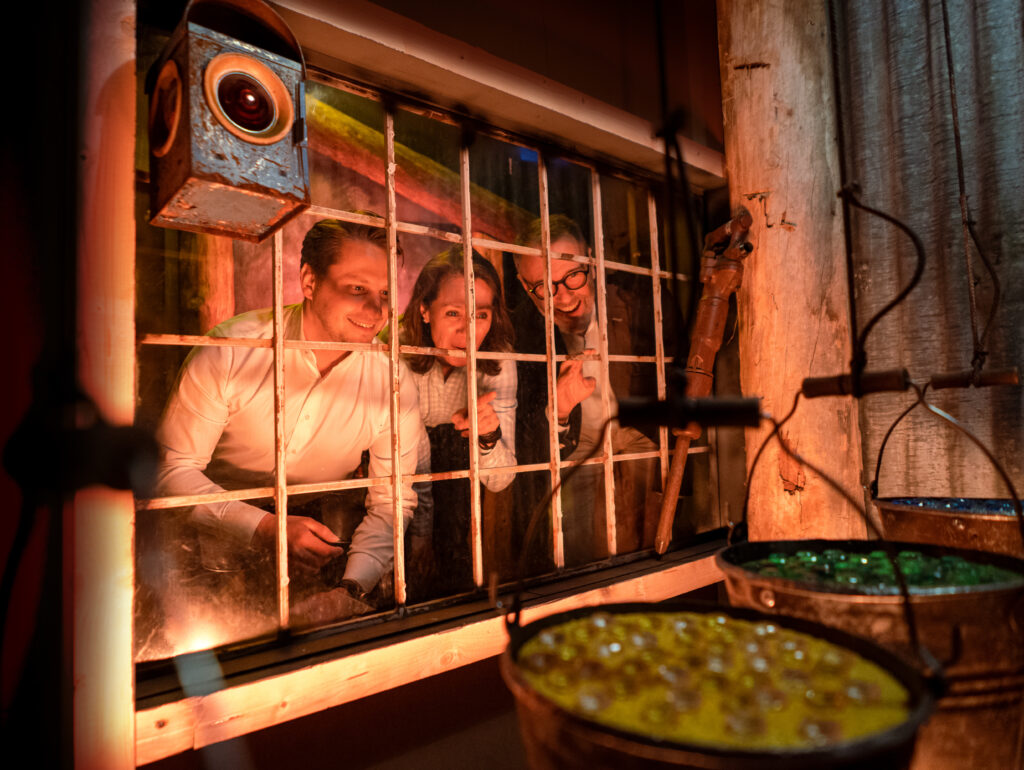
Boda Borg calls its Reality Gaming format Questing. Guests participate in teams of three to five and enter themed Quests. Each Quest consists of challenges encountered in sequence. Teams have to work out what to do, communicate and act together.
The experience is fast-paced and time-limited. Success allows the team to progress. Failure means leaving the Quest and deciding what to do next: try again or choose another Quest. Importantly, there is no single type of skill that defines success.
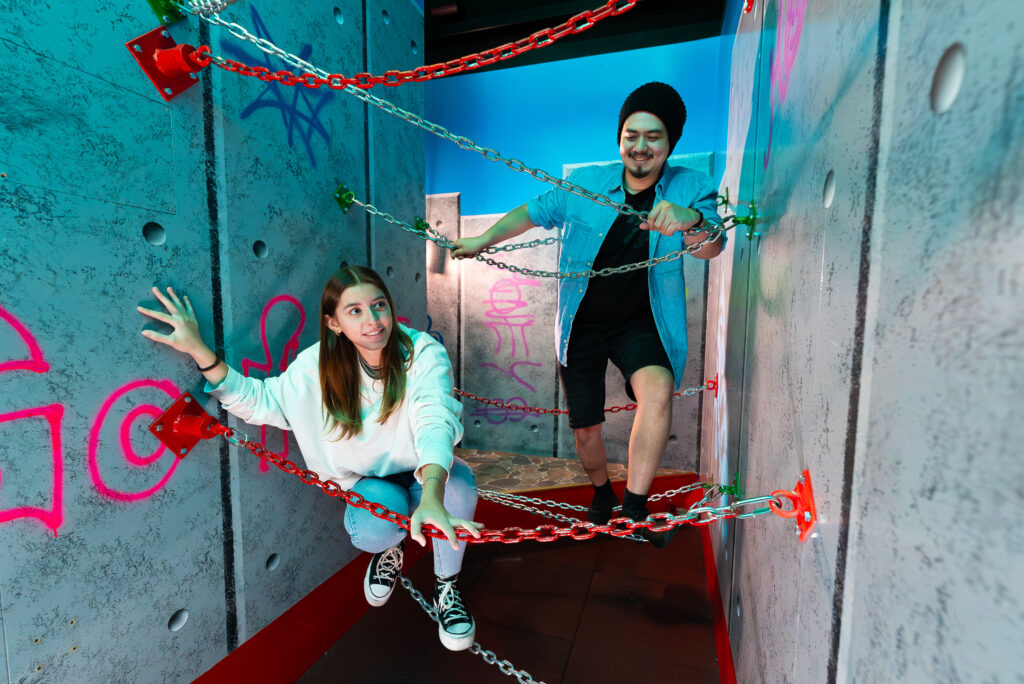
All Quests involve mental problem-solving. Green Quests involve no strenuous activity. Red Quests add light physical challenges such as some crawling and climbing. Black Quests are physically demanding. That variety makes different strengths within a team useful rather than incidental.
How is physical Reality Gaming different from VR and AR gaming?
The distinction becomes particularly clear when comparing the role of technology.
VR gaming places players inside computer-generated environments, while AR gaming adds digital elements to the physical world. Physical Reality Gaming, as pioneered by Boda Borg, makes the real environment itself the game.
At Boda Borg, technology is used to enable the experience rather than become the experience.
A Quest may respond to what Guests do, determine whether a team has succeeded, or control what happens next. But Guests still have to observe, think, communicate and act themselves.
This philosophy is central to Boda Borg’s strategy of making Questing “Ever More Real.”
Is Boda Borg the same as an escape room?
No. They can share certain characteristics, such as themed environments, teamwork and problem-solving, but Boda Borg’s Questing format is designed differently.
Rather than committing to one longer scenario, Guests can experience multiple fast-paced Quests during the same visit. Quests are repeatable, and teams can move between different themes and different kinds of challenges.
For that reason, Questing can be understood as a more varied and dynamic alternative to traditional escape rooms, not simply another name for the same format.
Why does Reality Gaming matter now?
The idea behind Boda Borg’s physical approach to Reality Gaming was unusual when Boda Borg began experimenting with it more than 30 years ago. Today, its context is different.
Entertainment has become increasingly digital and screen-based. That makes experiences built around physical presence and human interaction distinctive in another way. At Boda Borg, the game requires a team of people solving problems in real life.
You need your teammates. You need different abilities. You need communication, experimentation and shared decisions. This is why Boda Borg summarizes a wider part of its philosophy with the phrase “Keeping Humans Human!”
Reality Gaming therefore represents more than another entertainment technology. As more of our lives move into digital environments, the value of experiences that bring people together in the physical world becomes increasingly clear.
That is the idea at the heart of Questing – and why Boda Borg’s pioneering concept remains as relevant today as it was innovative in 1995.
FAQ
What is Reality Gaming?
Reality Gaming is a broad term that can refer to different types of interactive entertainment, including digital and physical experiences. In its physical form, Boda Borg defines Reality Gaming as real people attempting to conquer real-life game-like and adventure-based activities. The players, environment, actions and teamwork are physical rather than simulated through a screen or headset.
What is physical Reality Gaming?
Physical Reality Gaming involves people participating directly in game-like challenges within real environments. Rather than controlling a digital character, the participants themselves become the players. Boda Borg pioneered its own form of physical Reality Gaming, Questing, in Sweden in 1995.
What is Questing?
Questing is Boda Borg’s version of physical Reality Gaming. Teams of three to five take on themed, fast-paced Quests consisting of challenges experienced in sequence.
Does Reality Gaming use virtual reality?
Some experiences associated with the broader term Reality Gaming use VR or AR, but physical Reality Gaming does not depend on either. Boda Borg Questing is based on real-life environments rather than VR. Technology can enable what happens inside a Quest, but Guests do not need VR headsets or special wearable equipment.
Is Boda Borg an escape room?
No. Questing and escape rooms can both involve themes, teamwork and problem-solving, but Questing is a different format with multiple fast-paced and repeatable Quests. It offers a more varied and dynamic alternative to traditional escape rooms.
Do you need to be a gamer to enjoy Reality Gaming?
No. Boda Borg’s Guest base includes friends, families, schools and businesses. Boda Borg’s Guests are everyday people, not specifically gamers or escape-room enthusiasts.